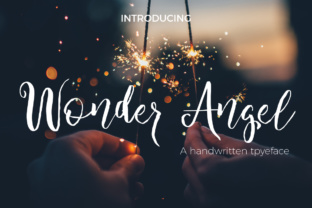
Wonder Angel Typeface Review for Social Campaigns
The campaign deadline was looming, and the creative director needed a headline that felt personal yet polished. We were designing a series of Instagram stories and YouTube thumbnails for a seasonal lifestyle collection, and standard sans-serifs felt too sterile while overly decorative scripts looked cluttered on small mobile screens. That was when I pulled Wonder Angel into the design file. It wasn’t just another font choice; it became the visual anchor for our entire content strategy. This review breaks down how this Script Handwritten typeface performs in real-world digital marketing workflows, focusing on readability, brand personality, and practical application.
Why Wonder Angel Works for Social Media Graphics and Thumbnails
When evaluating Wonder Angel, the first thing that stands out is its ability to convey warmth without sacrificing legibility. Designed as an exquisite handwritten script typeface, it gives off a bouncing and smooth vibe that feels organic rather than rigid. In my experience testing it for YouTube thumbnails and Instagram post headers, the font’s natural flow helps guide the viewer’s eye across the message quickly. Unlike many brush fonts that lose detail at smaller sizes, Wonder Angel maintains its character even when scaled down for mobile previews.
This quality is crucial for social media graphics where attention spans are short. The font’s casual nature makes brands feel more approachable, which is essential for engagement-driven campaigns. Whether you are creating a product teaser or a behind-the-scenes reel cover, Wonder Angel adds a layer of human touch that static geometric fonts often lack. It strikes a balance between professional polish and creative spontaneity, making it a versatile tool for content creators who need their visuals to stand out in fast-scrolling feeds.
Using Wonder Angel for Brand Identity and Logo Design
Beyond temporary social posts, Wonder Angel serves as a strong foundation for building a cohesive brand identity. Its organic and casual aesthetic lends itself well to logo design, particularly for lifestyle, wellness, or creative industries. When used in logo design, the font’s unique letterforms can become a memorable visual asset, helping to establish immediate brand recognition.
I’ve seen designers use this font effectively for packaging design elements, such as gift tags or product labels, where a handwritten feel suggests craftsmanship and care. For web design projects targeting boutique shops or artisanal brands, incorporating Wonder Angel into headers or call-to-action buttons can elevate the user experience by adding emotional resonance. However, it is important to remember that as a display font, it should be paired with a clean sans serif font for body text to maintain hierarchy and readability. This combination ensures that while the brand voice is expressive, the information remains clear and accessible.
Optimizing Wonder Angel for Email Marketing and Digital Ads
In email marketing, the subject line and header image are critical for open rates. Testing Wonder Angel in email banners revealed that it performs exceptionally well for promotional graphics. The font’s smooth curves work beautifully against both light and dark backgrounds, provided there is sufficient contrast. For digital ad sets, especially those promoting online courses or webinar registrations, using Wonder Angel for key headlines can increase click-through rates by making the offer feel exclusive and personalized.
For example, in a recent campaign for an online shop, we used Wonder Angel for the main sale announcement. The font’s playful yet elegant style helped the promotion feel like a special invitation rather than a generic discount. This subtle psychological shift can significantly impact audience engagement. Additionally, when designing Pinterest pins, the vertical format benefits from the font’s dynamic vertical rhythm, allowing text to stand out amidst dense visual content. Always ensure that the font size is large enough to be readable on mobile devices, as most users will encounter these ads on smartphones.
Practical Considerations for Commercial Font Licensing and Pairing
Before integrating Wonder Angel into client campaigns or commercial products, it is essential to check the included styles, alternates, ligatures, and weights. A robust set of glyphs allows for greater typographic flexibility, enabling designers to create custom layouts without relying on external tools. Furthermore, verifying multilingual support is crucial if your campaigns target international audiences.
Commercial font licensing varies, so ensure you have the appropriate rights for using the font in digital ads, merchandise, or branded templates. When pairing Wonder Angel with other typefaces, consider modern typography systems that complement its hand-drawn aesthetic. A simple, neutral sans serif font works best for supporting text, allowing the script to remain the focal point. Avoid pairing it with other heavy scripts or overly ornate serif fonts, as this can create visual noise and reduce message clarity. By thoughtfully combining Wonder Angel with clean, functional typefaces, you can achieve a balanced design that is both visually appealing and effective for conversion.
Limitations and Best Practices for Long Copy
While Wonder Angel is excellent for headlines, quotes, and short callouts, it is not suitable for long copy or dense information blocks. The handwritten style, while charming, can become fatiguing to read over extended periods. For blog posts, terms of service, or detailed product descriptions, stick to a highly legible sans serif or serif font. Using Wonder Angel only for emphasis—such as pull quotes, section dividers, or promotional badges—ensures that your content remains accessible to all users, including those with visual impairments or reading difficulties.
In summary, Wonder Angel is a powerful addition to any designer’s toolkit for creating engaging, human-centric digital content. Its unique character and versatility make it ideal for social media graphics, branding, and promotional materials. By understanding its strengths and limitations, marketers and designers can leverage this font to create compelling narratives that resonate with their audience and drive meaningful engagement.